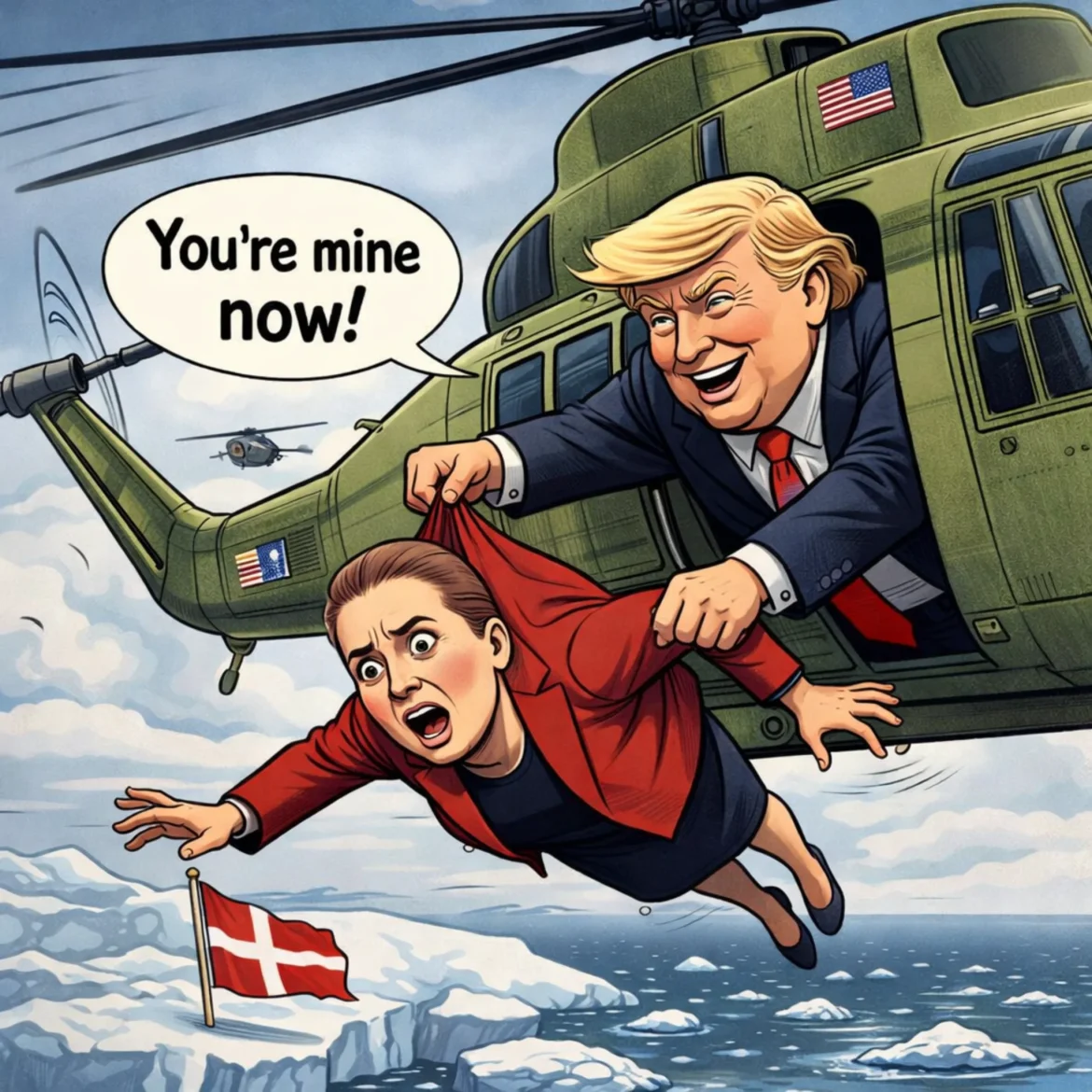
Greenland has become a recurring topic in global geopolitics, especially since Donald Trump publicly expressed interest in the island. What initially sounded like a provocation quickly turned into a question many people still search for today: who owns Greenland?
Trump’s interest highlighted Greenland’s strategic importance, from military positioning to natural resources, and placed the island at the center of international attention. While Denmark firmly rejected the idea, the episode reopened broader discussions about sovereignty, power politics and the relationship between Greenland, Denmark and the United States.
What followed was not a deal, but a revealing moment. Trump and Greenland became symbols of modern geopolitics — where ambition, national pride and unresolved histories collide, and where even a clear “no” can echo far beyond diplomatic rooms.
The Danish version explores this debate in greater depth, focusing on language, power and Denmark’s internal blind spots.
@jeffrey.sachs71 Europe is now merely a "vassal" of the United States Is Europe losing its soul? Jeffrey Sachs just dropped a brutal reality check on the weakness of current EU leadership Do you think the US would ever take Greenland? • #EuropeanUnion • #Geopolitics • #JeffreySachs • #Greenland • #ForeignPolicy ♬ original sound - Jeffrey Sachs
SOON pic.twitter.com/XU6VmZxph3
— Katie Miller (@KatieMiller) January 3, 2026
HOW DOES IT FEEL
HOW DOES IT FEEL, PRIME MINISTER?
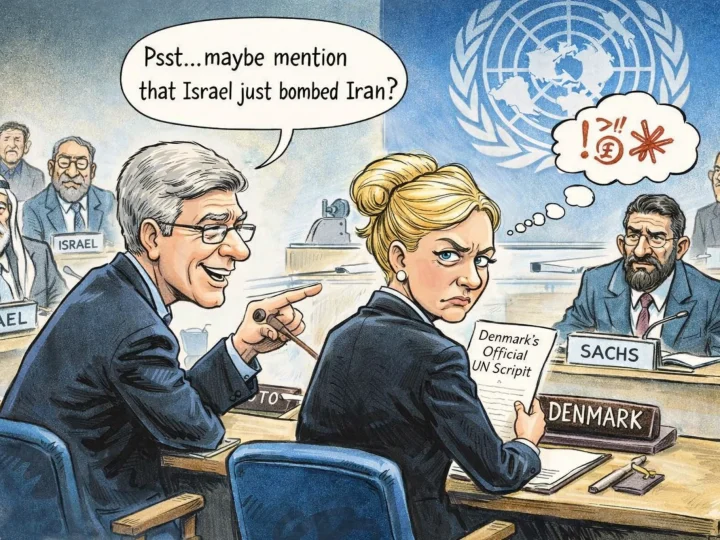
Copenhagen, October 10, 2023 — Prime Minister Mette Frederiksen, this question is not asked into thin air. It is asked in response to your own words — on record, on camera, in the centre of Denmark’s capital.
Standing outside the Israeli embassy in Copenhagen on October 10, you were asked by a TV 2 journalist whether your public sympathy for Israeli civilians would also extend to Palestinian civilians. Instead of engaging, you labeled the question “deeply worrying and entirely historically ignorant,” asserting that Israel has the right to defend itself, a defence that inevitably means casualties, and rejecting any comparison. The journalist’s question is documented in Journalisten.dk here: https://journalisten.dk/mette-frederiksen-angriber-journalists-palaestina-spoergsmaal-dybt-bekymrende/.
So the question must be asked back to you.
How does it feel to be interrupted, dismissed, and told that your question is inappropriate? To have concern reframed as ignorance and moral discomfort treated as something that should not be voiced at all? When it happens in real time, it feels personal — but this was not a one-off misunderstanding. It was a clear signal of where the limits of acceptable empathy are drawn.
This pattern appears far beyond press conferences and diplomatic rooms. When Palestinians speak about occupation, displacement, or civilian deaths, their words are rarely treated as testimony. They are filtered through suspicion, labeled as bias, or dismissed as extremism. When civilians are killed, their deaths are absorbed into the language of security and self-defense. Palestinians are not unheard because they are silent; they are unheard because their voices are systematically discounted.
The contrast is revealing. Greenland could say no — and be respected. Its refusal became a matter of sovereignty and diplomacy. Palestinians have been saying no for decades: no to occupation, no to bombardment, no to being reduced to collateral damage. Yet their refusal is met not with dialogue, but with justification for force. This difference has little to do with communication and everything to do with whose lives are considered politically valuable.
This is not only about Trump or Greenland. It is about how authority decides who gets to speak, who is allowed to refuse, and whose suffering must be explained away in the name of order. When a fair and legitimate question is treated as a threat, the message is clear: empathy is conditional.
When power is questioned, it does not listen.
It explains.