HUMAN ZOO IN DENMARK – THE DARK HISTORY DENMARK TRIED TO FORGET
In the early 20th century, Denmark was one of several European nations that hosted what we now call a
human zoo — exhibitions where people from colonised regions were displayed as entertainment for white audiences.
The Human Zoo Denmark in Copenhagen, Denmark showcased men, women and children — not animals — behind
wooden fences, dressed in “tribal” costumes to satisfy a public thirst for the exotic and the unfamiliar.
DENMARK HUMAN ZOO AT TIVOLI GARDENS
In 1905, Tivoli Gardens in Copenhagen became home to a disturbing event: the display of 25 individuals from the French colonies.
These human beings were brought to Denmark under the guise of education and curiosity but were treated as spectacles.
Denmark’s human zoo became part of a larger European trend that included similar exhibitions in Belgium, France and Germany.
A LEGACY OF COLONIAL VIOLENCE
While Denmark often prides itself on progressive values, the history of the human zoo in Denmark reveals a legacy of racism,
objectification and dehumanisation. This forgotten chapter is rarely taught, yet it’s crucial to remember.
Today, it’s time to confront the uncomfortable truth and ensure this history isn’t erased — but used to educate and challenge the systems that allowed it.
HUMAN ZOO IN DENMARK – THE FORGOTTEN EXHIBITION IN TIVOLI GARDENS
Back in 1905, Denmark staged what is now described as one of Europe’s last human zoos — right in the heart of Tivoli Gardens, Copenhagen. Known as the Danish Colonial Exhibition, this Denmark human zoo showcased not just artefacts, but real humans from Danish colonies — including Greenland, the Danish West Indies, the Faroe Islands and Iceland — what today would be called a “menneske-zoo i Danmark”.
The event ran from May to September 1905 and aimed to glorify Denmark’s colonial legacy. But behind the patriotic spectacle was a darker truth: humans were displayed like objects, reinforcing twisted racial theories and colonial propaganda.
HUMAN ZOO DENMARK – SHOCKING TRUTH BEHIND THE 1905 TIVOLI SHOW
Among the “exhibits” were children from the Danish West Indies, who were put in cages when they wandered too far. Icelandic students protested being presented alongside so-called “primitive races”, sparking national debate. The event became a bizarre clash between colonial pride and public shame.
While countries like Belgium and France are often criticised for their human zoos, the Danish human zoo in Tivoli Gardens is largely forgotten — but no less disturbing.
This story reveals more than just history. It shows how a small nation tried to manufacture power through people. Read more about the 1905 Danish Colonial Exhibition on
Danmarkshistorien (in Danish)
.

CAMPS, CENTRES AND PEOPLE KEPT OUT OF SIGHT
The story of the human zoo in Denmark is about more than a single exhibition in
Tivoli Gardens, Copenhagen. It is about a way of thinking in which certain people can be
moved, grouped and controlled so that the majority can feel safe, civilised or superior.
Today, this logic does not only live in debates about “ghettos” and
remigration. It also shows up in places like the Kærshovedgård departure centre
in Denmark, where rejected asylum seekers and people without a clear future in the country are
kept in a remote, highly controlled environment. They are not exhibited like in 1905 – if anything, they
are kept out of sight – but their lives are still organised around other people’s need to manage, contain
and forget them.
I am not saying that a departure centre is the same as a human zoo. The histories are different, and so
are the conditions. But both raise the same uncomfortable question: what happens to a society when
certain groups are treated less as neighbours and more as problems to be placed somewhere – on display,
at the edge of the city, or far away from everyday life?
WHY THIS HISTORY STILL MATTERS
The human zoo in Denmark was not just an embarrassing footnote in 1905. It was a deliberate choice: to turn living people into symbols of power, civilisation and progress. The colonial exhibition in Tivoli Gardens, Copenhagen sorted human beings into “advanced” and “primitive”, centre and margin – and asked visitors to feel superior.
Today, Denmark tells a different story about itself: tolerant, democratic, egalitarian. But the same logic of sorting and controlling people has not disappeared. It lives on in the language of “ghettos” and “parallel societies”, in political talk of remigration, and in remote places like the
Kærshovedgård departure centre in Denmark, where unwanted people are kept out of sight and out of mind. The tools and terms have changed. The question has not: whose presence is welcomed, and whose is treated as a problem to be managed somewhere else.
Remembering the human zoo in Tivoli Gardens is not about accusing ordinary Danes today of what happened more than a hundred years ago. It is about telling the full story of a country that likes to see itself as progressive, while also confronting how it has displayed, sorted and controlled certain bodies – from colonised subjects in 1905 to racialised minorities, migrant workers and their children in the present.
SUPPORT INDEPENDENT STORIES ABOUT POWER AND DIGNITY
This article is written from the perspective of a guest worker’s son, not a neutral observer. It is part of an ongoing attempt to connect Denmark’s colonial past to the realities of migrant labour, “ghetto” policies, remigration debates and camps and centres at the edge of the map. That kind of work takes time, research and a willingness to stay with difficult truths that do not fit into simple national myths.
If you believe these stories matter and should remain freely available, you can help by supporting the projects and designs that fund this writing. Your support – whether through sharing the article, talking about it, or backing the work financially – is a way of saying that the people inside these histories, and the people living with their consequences today, are worth more than being forgotten.
IF YOU HATE HUMAN ZOOS, DON’T SCROLL – SUPPORT
-
Sold out

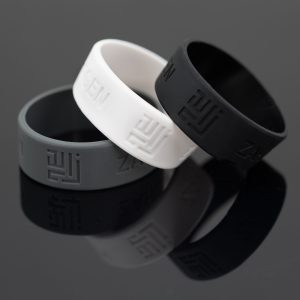
BLACK PALESTINE BRACELET – WEAR THE RESISTANCE
IMPACT THREADS€ 7STAND FAST. WEAR THE FIGHT
Palestine Charity Bracelet
Length: 197 mm
Width: 24 mm
Thickness: 3 mm
Material: Soft, durable siliconeThis isn’t fashion. It’s a message.
It says: I won’t look away.
It says: Every day, every wrist, every voice counts.
And it puts 100% of profits straight into the fight for justice.Waterproof. Skin-friendly. Unisex.
No frills. Just purpose.€ 7 -
VLADIMIR CANCER
Jewelry, Parachute CordThe bracelet is sold to benefit the fight against cancer, with a particular focus on testicular cancer. Close to 300 men are diagnosed with testicular cancer in Denmark every year. By purchasing the red bracelet, you contribute to the campaign against cancer. @zlcopenhagen forwards half of the profits directly to Kræftens Bekæmpelse (The Danish Cancer Society) and their work for fighting testicular cancer. The red color indicates support for cancer research and charity and helps to create visibility and awareness through the attention and dialogue your bracelet can create. The red bracelet is named after Vladimir a previous model for @zlcopenhagen. He was 2016 diagnosed with cancer and lost after a short period the battle against this serious disease.€ 26€ 26 -
BLACK PARACORD BRACELET SILVER LOCK
Jewelry, Parachute CordAll in all, this is one accessory you definitely want to consider for yourself or as a gift. With a classic style and premium quality, this bracelet is sure to complement a real man. This stunning bracelet is an accessory designed to match any outfit. It’s made with military grade parachute cord which you see real paratroopers employ.€ 26€ 26 -
ARMY PARACORD
Jewelry, Parachute CordSo simple.. Handmade bracelet made of eco-friendly parachute cords and 316L Stainless Steel, with black ZLC logo engraving.€ 26€ 26 -
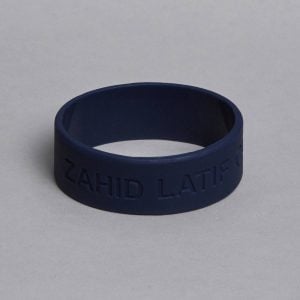
ZLC NAVY CHARITY BRACELET
IMPACT THREADSThe colour of power and authority. Be a proud member of our ZLC Team and wear the ZLC Charity Bracelet, and make a difference. By selecting which organisation, you want to support, you decide for yourself, whom you want to support. Be a proud member of our ZLC Team and wear the ZLC Charity Bracelet, and make a difference.€ 5€ 5 -
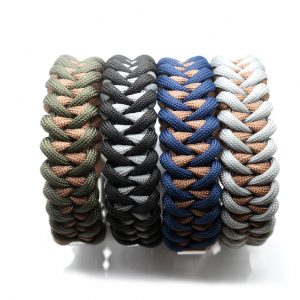
AARON BUSHNELL
FROM SOLDIER TO SOLDER PARACORD BRACELET, Parachute Cord€ 39A handmade bracelet made of eco-friendly parachute cords and 316L Stainless Steel, with black ZLC logo engraving, combines blue and beige.This jewellery is dedicated to Senior Airman Aaron Bushnell, 25, who tragically self-immolated on February 28, 2024, outside the embassy in Maryland. A specialist in cyber defence operations, Aaron's act was a protest against oppression, a call for awareness and change.€ 39 -
BLACK IN BLACK PARACORD
Jewelry, Parachute CordHandmade bracelet made of eco-friendly parachute cords and 316L Stainless Steel, with black ZLC logo engraving. All in BLACK.€ 26€ 26 -
ORANGE BLACK PARACORD
Jewelry, Parachute CordThis orange bracelet is perfect for you if you are feeling low or demotivated. Do you know why? Orange, a blend of red and yellow is the color of motivation and friendliness. This orange charity bracelet is a representation of motivation in a tough fitness routine? It will give a sense of freedom and positivity. The orange-colored bracelet signifies the LEUKEMIA awareness campaign. Handmade bracelet made of ecofriendly parachute cords and 316L Stainless Steel, with black ZLC logo engraving. This stunning bracelet is an accessory designed to match any outfit. It’s made with a military-grade parachute cord which you see real paratroopers employ.€ 26€ 26