


OCCLUSION TRAINING – HOW TO GET MORE PUMP WITH LESS WEIGHT
Occlusion training is a form of blood flow restriction training (BFR training) where you use an occlusion band
around your arms or legs to create an intense muscle pump with relatively light weights.
It can be a powerful tool for athletes, beginners and anyone who wants more muscle stimulus
without heavy loads on the joints.
WHAT IS OCCLUSION TRAINING?
If you have ever asked yourself “what is occlusion training?” or even simply
“what is occlusion?”, here is the short answer:
In training, occlusion means partial restriction of blood flow. You apply pressure
high on the arm or leg so that venous blood (the blood flowing back from the muscle) is
restricted, while arterial blood can still flow into the muscle.
That creates three key effects:
- The muscle fills quickly with blood – a very strong, almost bulging pump.
- Waste products like lactic acid stay in the muscle for longer.
- The muscle experiences high metabolic stress, which can stimulate growth.
Research suggests you can see hypertrophy effects similar to heavy lifting even when you only
use around 20–30% of your 1RM. That is why occlusion training and other forms of
blood flow restriction training have become popular in both strength and rehab settings.

HOW DO OCCLUSION BANDS WORK?
When people search for “how do occlusion bands work?”, they are really asking how a simple elastic strap can change what happens inside the muscle.
An occlusion band (or a pair of occlusion bands) works by:
- Wrapping tightly but safely around the top of your arm or leg.
- Restricting venous blood return so blood “pools” in the working muscle.
- Creating a build-up of metabolites and a strong growth signal for the muscle.
The result is an intense pump, faster fatigue and recruitment of more muscle fibres, even when you are training with light weights.
For practical use, it is much safer to use dedicated BFR straps instead of random
elastic bands. At ZLCOPENHAGEN we use our own
ZLC Black Occlusion Bands with velcro for arms & legs
for controlled occlusion training.
If you want to explore more gear for pump work, you can also check our
fitness gear & occlusion bands collection
for different setups and training styles.

-

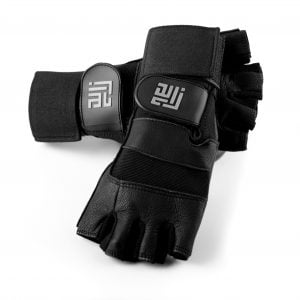
ZLC WEIGHT LIFTING GLOVES
Accessories, Fitness GearIf you have been looking for a perfect gym gloves for yourself, then this exclusive ZLC Weight Lifting Gloves will surely impress you in many ways. The ZLC brand has designed these excellent exercise gym gloves with wrist wrap closure for maximum support and injury prevention. The perfect solution if you need extra support while weight training to protect a weak or injured wrist. Produced by underprivileged men/women in Punjab, Pakistan. Providing economic opportunities for people who need it.€ 16€ 16 -
ZLC BLACK POWER LIFTING STRAPS WEIGHTLIFTING
Fitness GearZLC Power lifting Straps – lifting straps. Developed for the serious athlete who needs the extra energy needed to go from good to best. Produced in Pakistan, by village people from rural areas in Punjab, Pakistan. Adjustable heavy-duty lifting straps with extra padding, with heavy-duty stitching for enhanced durability. Support yourself by supporting other people in need.Price range: € 16 through € 52Price range: € 16 through € 52 -
ZLC PINK POWER LIFTING STRAPS WEIGHTLIFTING
Accessories, Fitness GearPlease note, that these products are made on customer demand with an expected delivery of 2-3 weeks. Pink Power lifting Straps - weightlifting straps by ZLCOPENHAGEN Developed for the serious athlete who needs the extra energy needed to go from good to best. Produced in Pakistan, by village people from rural areas in Punjab, Pakistan. Adjustable heavy-duty lifting straps with extra padding, with heavy-duty stitching for enhanced durability. Support yourself by supporting other people in need.€ 10€ 10 -
ZLC BLACK OCCLUSIONS BANDS VELCRO BICEPS ARMS
Accessories, Fitness GearZLC Occlusions Band for arms with velcro closure Transform your arms from skinny to sensational with our occlusion bands. Sculpt bulging biceps that command attention and respect. Sold in pairs, these bands are your ticket to fame and glory. Feel confident and powerful in every room you enter as your arms grow bigger and stronger. Don't settle for mediocrity; step into the spotlight and claim your rightful place among the elite. Say goodbye to frustration and hello to a new era of confidence with our revolutionary occlusion bands.€ 20€ 20 -
ZLC BLACK OCCLUSION BANDS VELCRO ARMS & LEG
Accessories, Fitness GearZLC Occlusion Bands with velcro closure for arms & legs, 2 set Bands for the arms come in 3 sizes: Small (20-30 cm circumference, 16") Medium (28-42 cm circumference, 20") Large (40-52 cm circumference, 24") Bands for the legs come in 75 cm as a standard size (30") Durable eco-friendly elastic, made of HQ material. Made in Pakistan.€ 29€ 29 -
ZLC MIDNIGHT MUSCLE BLACK WRIST WRAPS
Accessories, Fitness GearZLC Midnight Muscle Black Wrist Wraps are made in Pakistan. Our Wrist Wraps collection contains i.a. polyester that is recycled. If you have been looking for perfect wrist wraps for yourself, then these exclusive ZLC Midnight Muscle Black Wrist Wraps will surely impress you in many ways. Maximum support and injury prevention. The perfect solution if you need extra support while weight training to protect a weak or injured wrist. Workout hard, grab people's attention whenever you go to the Gym. Show off your muscles, and add extra hotness to your body by using our ZLC Midnight Muscle Black Wrist Wraps. Your naturally smooth, sexy, and kinky body figure with these comfy black wrist wraps will cause insomnia to the boys and girls at the gym. Produced by underprivileged men/women in Punjab, Pakistan. Providing economic opportunities for people who need it.€ 10€ 10 -
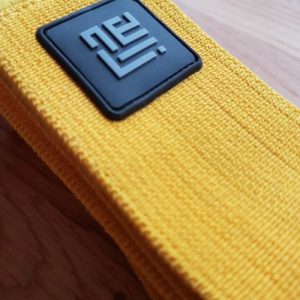
ZLC YELLOW OCCLUSION BANDS VELCRO BICEPS ARMS
Accessories, Fitness GearZLC Occlusions Band with velcro closure ( arms ) Comes in 3 sizes: Small (20-30 cm circumference) Medium (28-42 cm circumference) Large (40-52 cm circumference) Durable eco-friendly elastic, made of HQ material. Made in Pakistan.€ 16€ 16 -
ZLC BLACK COMPRESSION TIGHTS FOR MEN
Athletic, Activewear & Fitness, Bottoms, Compression Tights, Fitness Gear€ 65SHOW OFF. STAY TIGHT. FEEL HUGE.
Slide into our black compression tights for men — sculpted to grip your thighs, lift your glutes, and show off your bulge like it deserves.
Born in Copenhagen with bold Danish-Punjabi design, this second skin makes every move magnetic.
Wear them to the gym, rock them on the street. Wet or dry – they leave nothing to the imagination.
Confidence isn’t optional. It’s built-in.€ 65






WHY OCCLUSION TRAINING WORKS
Several mechanisms are thought to explain why occlusion training is effective:
- Metabolic stress – the build-up of metabolites increases the “stress” inside the muscle.
- Cell swelling – muscles become so full that the body is pushed towards building up,
not breaking down. - Greater fibre recruitment – slow type I fibres fatigue quickly, so fast-twitch
type II fibres have to join in, even with low loads. - Hormonal signalling – for example, increased IGF-1 production, which supports
muscle protein synthesis and helps prevent muscle wasting.
Together, these factors make occlusion training a unique way to get more out of light weights
and high reps, especially when your joints need a break from heavy loading.
WHO CAN BENEFIT FROM OCCLUSION TRAINING?
Used correctly, occlusion training can benefit:
- Athletes who want extra hypertrophy work without constantly lifting heavy.
- Lifters with sore or sensitive joints who still want a strong muscle stimulus.
- Older adults who need to protect their joints but maintain muscle mass and strength.
- Gym-goers who love chasing an intense arm or leg pump at the end of a session.
It is not magic, and it does not replace smart training or recovery – but it is a very
useful tool in the toolbox when used with respect and common sense.
HOW TO USE OCCLUSION BANDS ON ARMS & LEGS (SAFE BASICS)
Occlusion training should feel intense – but never out of control. Here are basic guidelines
for using occlusion bands for arms and legs safely.
Band placement
- Arms: Place the occlusion band as high as possible on the upper arm, close to the shoulder.
- Legs: Place the band high on the thigh, close to the groin.
- Do not place bands around elbows, knees, neck or torso.
How tight should an occlusion band be?
- Think of a 1–10 pressure scale, where 10 is the tightest you can possibly tolerate.
- Arms: aim for about 5–6 out of 10.
- Legs: aim for about 6–7 out of 10.
- You should still feel some pulse below the band, and the skin should not turn completely
white or blue.
Basic training setup
- Choose 1–3 exercises for arms or legs.
- Work with around 10–30% of your 1RM.
- Do 3–5 sets of 15–30 reps with 30–45 seconds rest between sets.
- Keep the occlusion band on during the whole block for that muscle group, then remove it
once you are done.
It should burn, and the pump will be extreme – but you should still feel in control, not panicked.
SAFETY FIRST – WHEN YOU SHOULD AVOID OCCLUSION TRAINING
Because occlusion training directly affects blood flow, it is not suitable for everyone.
You should always speak to a healthcare professional before using occlusion bands if you:
- have heart or cardiovascular disease
- have high blood pressure or circulation problems
- have a history of blood clots
- have diabetes or nerve damage
- are pregnant
- are unsure about your health status in general
Stop immediately if you feel pain, numbness, tingling, dizziness or anything that feels
clearly wrong. This guide is general information only – it is not medical advice.
BONUS: FROM GYM PUMP TO BULGE AESTHETICS

BONUS: FROM GYM PUMP TO BULGE AESTHETICS
Once people experience how much pump occlusion training can create in arms and legs, some start
to wonder what would happen if they tried something similar in other areas. For some men, that
turns into curiosity about using soft, elastic bands as a kind of cockring to create a
fuller bulge under underwear or swimwear.
It may sound playful, but the risks are very different:
- The genital area is far more delicate than arms or legs.
- Too much pressure can damage nerves and blood vessels.
- Bands that are too narrow, too hard or too tight can cause real harm.
If you are curious about bulge aesthetics and cockrings, it is far safer to use
products specifically designed for that purpose, with softer materials, known sizes and
clear usage guidelines – and always with common sense: if there is pain, numbness or colour
changes, that is not “a good sign”, it is a stop sign.
CONCLUSION
Occlusion training offers a unique way to promote muscle hypertrophy with relatively light
weights. For athletes, everyday lifters and older adults, it can provide a strong muscle
stimulus while reducing mechanical stress on the joints.
Used wisely, with respect for safety and your own body, occlusion bands can give you an
insane pump, fresh training stimuli – and maybe even inspire how you play with your physique
and aesthetics both inside and outside the gym.


